Dip powder has gone from a niche service to a standard option on almost every salon menu. It’s an alternative to gel and acrylic that a lot of people end up preferring — for the durability, the process, and the finish.
At Happy Nail and Spa in Kissimmee, dip powder has become one of our most-requested services. Once you understand what it is and how it works, it’s easier to tell whether it’s the right fit for your nails.
What Is Dip Powder?
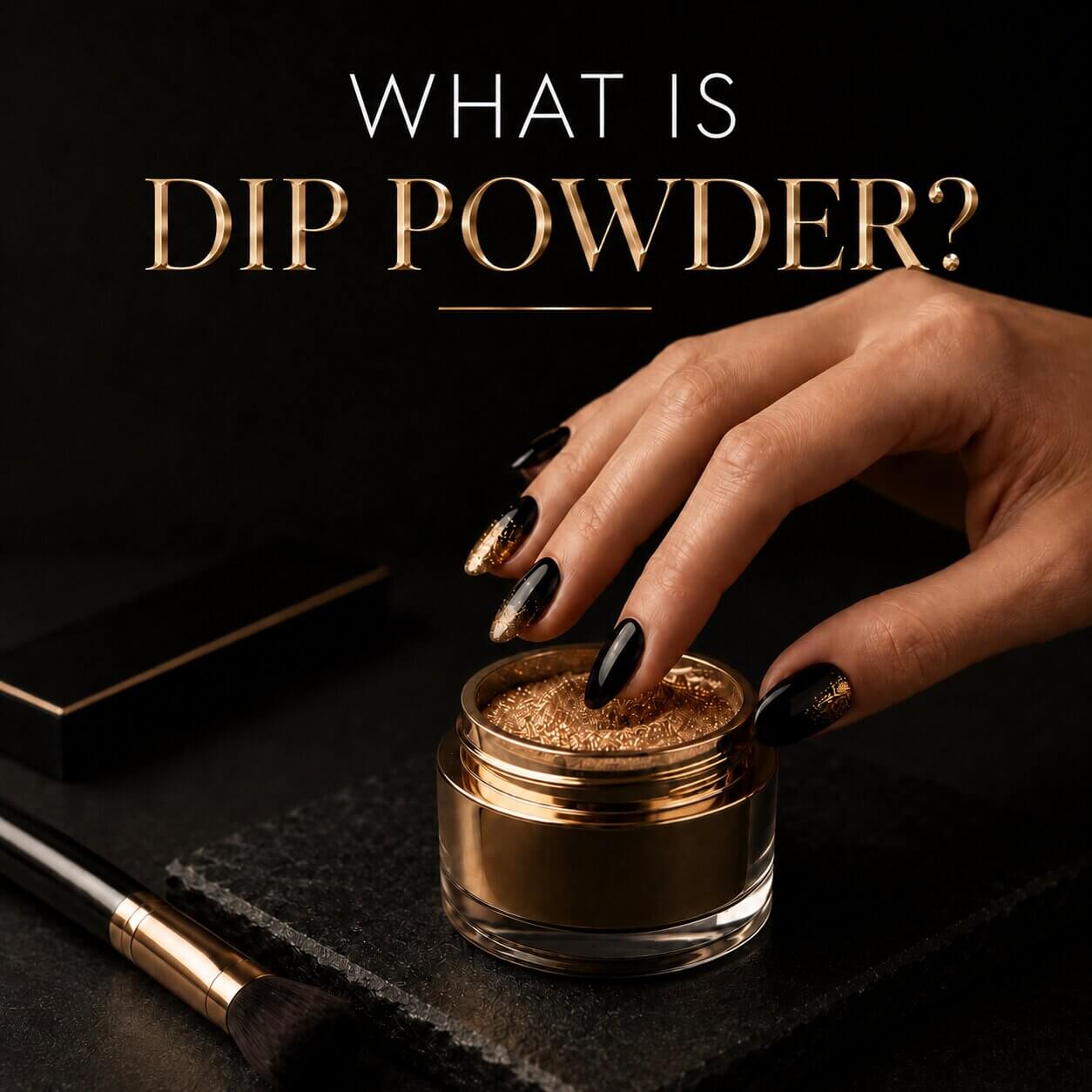
Dip powder is a nail enhancement system that uses finely milled acrylic powder and a bonding liquid to build a hard, durable coating on your nail. Unlike gel polish, which cures under UV light, or acrylic, which is mixed from liquid and powder, dip powder hardens through a chemical reaction when the powder meets the bonding agent.
The name comes from how it’s applied. Your technician brushes a base coat onto the nail, then dips your finger into a pot of colored powder. The powder sticks to the wet base, and the step repeats until the coverage and thickness are right. A sealant locks everything in.
The system has been around since the 1980s but took off in the 2010s, when better formulas, more colors, and refined techniques made it mainstream.
How the Dip Powder Process Works
The application takes about 45 to 60 minutes — similar to a gel manicure — and runs through a few clear stages.
It starts with prep: shaping, cuticle care, and a light buff to help the product grip. Your nails have to be completely clean and dry, since any oil or moisture stops the powder from bonding.
Next, your technician brushes on the bonding liquid and immediately dips the nail into the powder, which sticks only where the liquid was applied. This repeats two to three times to build coverage and strength. After the last dip, the excess powder is brushed off and the nail is filed to its final shape. An activator hardens everything into a solid structure, and a top coat seals it with a glossy finish.
Most dip systems need no UV curing, which is part of the appeal — your nails are dry and ready the moment the top coat goes on. The exception is hybrid gel-dip products, where a gel top coat may still need a quick cure under a lamp.
Why People Love Dip Powder
1. Exceptional Durability
The biggest draw is how long it lasts — most people get three to four weeks with no chipping or lifting. The powder forms a hard shell that shields your natural nail from the daily wear that wrecks regular polish.
That toughness comes from how it’s built. Instead of being painted on in thin layers like polish, dip builds up a thicker bonded shell over the nail, which resists the lifting and peeling other methods are prone to.
People who are hard on their hands feel the difference most. If you work in healthcare, food service, or any hands-on field, dip can survive conditions that destroy gel polish in days — which makes it cost-effective even at a higher upfront price.
2. No UV Light Required
Because dip hardens through a chemical reaction rather than UV curing, it appeals to anyone wary of lamp exposure. The actual risk from nail lamps is debated, but skipping UV entirely removes the question.
Air-drying also means no sitting under a lamp between coats. Appointments can feel quicker even when the clock says otherwise, since you’re moving through the process instead of waiting on a cure.
Some people simply feel their nails are healthier without repeated UV. Whether that’s physical or in the head, the comfort is a fair reason to choose dip.
3. Lighter Than Acrylics
Acrylics can feel heavy, especially if you’re new to enhancements. Dip gives you similar strength with noticeably less weight, so it doesn’t have that bulky feel.
That lightness makes everyday things — typing, texting, detailed handwork — more comfortable, and you’re less aware of having anything on at all. For first-timers, that makes the adjustment easier.
The thinner build also looks more natural. Dip can give a refined finish that doesn’t shout “fake nails,” which works well in professional settings where dramatic enhancements don’t fit.
4. Wide Color Selection
Dip comes in hundreds of colors and finishes — solids, shimmers, glitters, special effects. Because the color lives in the powder rather than being painted on, it reads with a different depth than regular polish.
The range keeps growing as the system does, from classic reds and nudes to trend and seasonal shades. Many salons stock several brands to widen the choice. You can even layer powders for custom shades and ombré effects that are harder to pull off with other systems.
Potential Drawbacks to Consider
Dip isn’t perfect for everyone. The application takes real skill — poor technique leaves nails thick and uneven — so an experienced technician matters.
Removal needs care too. The coating is hard and has to be soaked off with acetone, like gel. Aggressive removal damages the natural nail, and people who say dip “weakened” their nails are often describing bad removal rather than the product itself.
There’s also the sanitation question, since dipping multiple clients’ fingers into one powder pot raises cross-contamination concerns. Reputable salons get around this by sprinkling powder over the nail instead of dipping, or using individual portions — worth asking about if it’s on your mind.
Dip Powder vs. Other Enhancement Systems
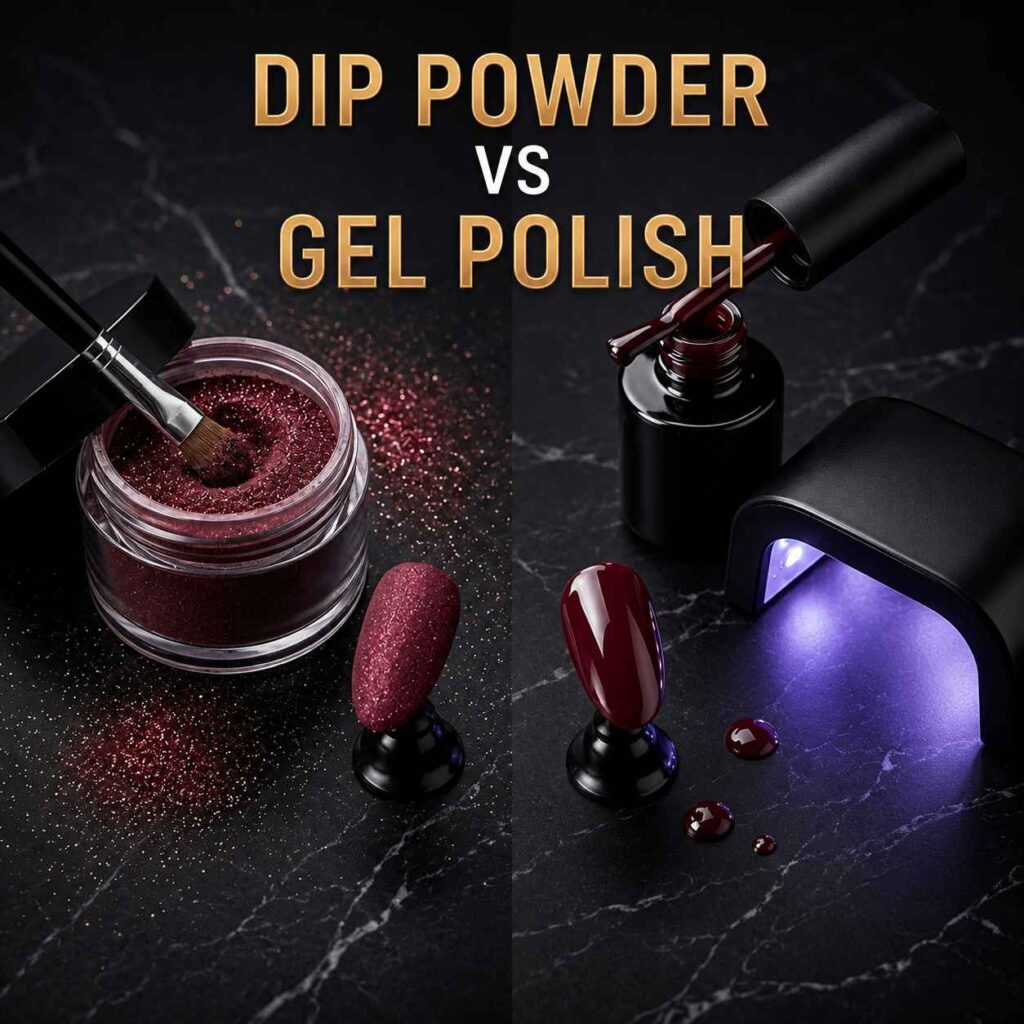
Against gel polish, dip is harder and lasts longer but takes longer to remove. Gel is easier to apply and take off but chips sooner — so it comes down to durability versus flexibility.
Against traditional acrylic, dip is lighter and skips the strong-smelling liquid monomer. Acrylic still wins for extra length and easier repairs, but for moderate length with maximum durability, dip usually comes out ahead.
Against BIAB and other builder gels, dip is harder and more chip-resistant but less flexible. Builder gels flex with the nail and support natural growth better, and they cure under a lamp. If nail health is your top priority, BIAB may suit you better despite dip’s durability edge.
Caring for Dip Powder Nails
Upkeep is simple. Use cuticle oil daily to stop dryness and cracking around the edges, and wear gloves for cleaning or dishes to keep harsh chemicals off the manicure.
Don’t use your nails as tools — dip is strong but not indestructible, and careful use extends both the manicure and the natural nail underneath.
Book your soak-off and new set before the nails grow out too far. Dip is usually removed and reapplied each time rather than filled in, since topping up a grown-out base is hard to keep even and tends to thicken the nail at the cuticle. Waiting too long also lets the product lose grip at the base, which leads to breakage — so a fresh set every three to four weeks keeps everything clean and problem-free.
Is Dip Powder Right for You?
Dip powder works well if you want a long-lasting manicure without UV exposure, especially if you’re hard on your hands and need real durability. The wide color range and natural finish make it flexible across most lifestyles.
If your nails are very weak or damaged, ask your technician whether dip or a gentler system like BIAB is the better call. And if you like changing color often, gel might suit you more, since it comes off faster.
📞 Call to book: (407) 390-8836
📍 Location: 3260 Vineland Rd suite #105, Kissimmee, FL 34746
Explore durable, beautiful nail options including dip powder with experienced technicians at Happy Nail and Spa.